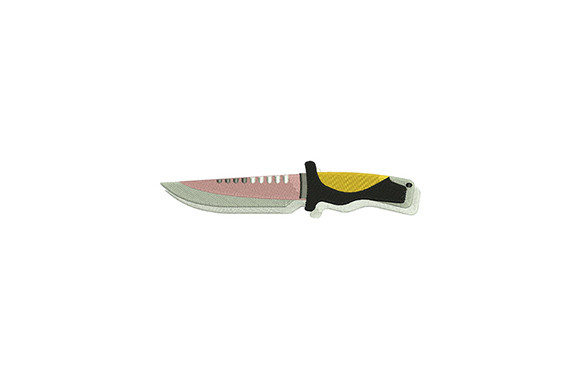
Kitchen Knife Embroidery Design Review for Merch
As an embroidery designer who has spent years digitizing files for small business owners, I approach every new machine embroidery design with a critical eye. It is not just about whether the art looks good on a screen; it is about how that art translates into thread on fabric. Recently, I reviewed the Kitchen Knife design, and I want to share my professional assessment of its viability for branded merchandise, staff uniforms, and boutique product lines.
The product description promises to add character to your kitchen, appealing to those passionate about cooking and chopping. While this suggests a home-use context, my focus is strictly on commercial application. Can this simple yet bold motif serve as a recognizable logo element for a café, a bakery, or a culinary supply shop? Let us break down the visual personality and practical performance of this digital embroidery file.
Visual Personality and First Impressions
The first thing you notice about the Kitchen Knife design is its simplicity. In the world of branding, simple often equals scalable. The design feels rustic yet modern, striking a balance that works well for artisanal brands. It does not scream "corporate sterile," nor does it feel overly whimsical. Instead, it projects a sense of craftsmanship and utility.
For a small business owner, this visual tone is crucial. If you run a farm-to-table restaurant or a handmade cutlery shop, this design aligns perfectly with a brand identity centered on authenticity. It feels professional but approachable. When digitized correctly, such a design avoids the clutter that often plagues complex logos, ensuring that the core message—passion for cooking—is communicated instantly.
Real-World Applications for Small Business Merch
Where does this design actually shine in a commercial setting? I have tested similar motifs on various substrates, and here is where the Kitchen Knife performs best:
- Staff Uniforms and Aprons: This is the most obvious use case. An apron embroidery featuring this knife icon adds immediate credibility to chefs and baristas. It turns a standard uniform into a branded asset.
- Embroidered Patches: Because the design is described as simple, it is an excellent candidate for woven or embroidered patches. You can sew these onto canvas tote bags, denim jackets, or even packaging for a premium unboxing experience.
- Cap Embroidery: A small version of this design on the front or side of a baseball cap creates subtle brand recognition. However, curvature matters, which we will discuss later.
- Tote Bag Design: For grocery stores or bakeries, a sturdy canvas tote with this stitched emblem serves as both a functional item and a walking advertisement.
When creating small business merch, consistency is key. Using the same embroidery file across different products helps build customer trust. Whether it is on a work shirt or a gift item, the visual consistency reinforces your professional image.
Technical Considerations and Placement Strategy
While the concept is strong, execution is everything. As a designer, I must warn you about specific challenges when applying this design to certain items. The description mentions it comes with multiple embroidery formats, but it does not specify stitch count or density. This is a variable you must check before production.
Stitch Density and Fabric Texture
If the design has high stitch density, it may pucker lightweight fabrics like thin cotton aprons or silky tote linings. Always test on the actual fabric texture you plan to use. For dark uniforms, ensure you have enough color contrast. A black knife on a black chef coat will vanish. You might need to use metallic threads or a contrasting border to make the design pop.
Small Patch Sizes and Curved Surfaces
Be cautious when scaling this down for tiny labels or curved cap fronts. Fine details can get lost if the hoop size is too small relative to the detail level. If the knife handle has intricate lines, they may merge into a blob at less than two inches wide. I recommend creating a printable mockup at actual size to verify legibility before stitching a single thread.
Stabilizer Selection
Never skip the stabilizer. For items that undergo frequent washing, such as kitchen towels or daily-wear aprons, use a cut-away stabilizer to prevent distortion over time. This ensures your finished product maintains its shape and professionalism after dozens of wash cycles.
Enhancing Brand Identity and Customer Engagement
Why bother with embroidery at all? Why not just print? Embroidery adds tactile value. It signals quality. When a customer touches an embroidered patch on a tote bag or feels the raised texture of a logo on a shirt, they perceive higher value. This perception directly impacts buyer engagement and willingness to pay premium prices.
For Etsy sellers and crafters, offering items with this Kitchen Knife design can differentiate your handmade product from mass-produced competitors. It shows attention to detail. Furthermore, using this design as part of your design assets allows for cohesive marketing. Imagine social media posts featuring behind-the-scenes videos of the embroidery process. This content builds a narrative around your brand, fostering a deeper connection with your audience.
Practical Designer Notes for Production
Before you launch this design into your commercial embroidery workflow, follow these steps to ensure success:
- Test in Black and White: Remove color variables first. If the design does not read clearly in monochrome, it will not work well in thread either.
- Check Commercial Licensing: The description notes it is a machine embroidery design, but always confirm the license terms. Ensure you have the right to use it for selling physical goods.
- Review Thread Colors: Select threads that match your brand palette. Do not just pick standard colors; customize them to fit your specific brand identity.
- Inspect Spacing: Look for jumps or dense areas that might cause thread breaks. Edit the file if necessary to optimize stitch pathing.
- Create Client Mockups: If you are doing this for a client, show them a digital proof on the actual garment type. Manage expectations regarding size and placement.
In conclusion, the Kitchen Knife design holds significant potential for businesses in the culinary and lifestyle sectors. It is versatile, visually distinct, and capable of elevating standard merchandise into branded collectibles. However, its success depends entirely on technical precision. Respect the limitations of the fabric, choose the right stabilizer, and verify the file details. When done correctly, this simple embroidery element can become a powerful symbol of your brand’s passion and professionalism.