Reviewing the Pencil Case Embroidery Design for Real Projects
As an embroidery designer who spends countless hours digitizing and stitching, I am always cautious about downloading new machine embroidery design files. We all know the frustration of buying a file that looks beautiful in the preview but turns into a thread nest on the hoop. Recently, I came across the Pencil Case design on Creative Fabrica, and it caught my eye not just for its aesthetic, but for its potential versatility in a commercial setting. After reviewing the details and considering how it would perform in real-world applications, I wanted to share my honest assessment for fellow crafters and small business owners.
First Impressions and Visual Appeal
The first thing that strikes you about the Pencil Case design is its unique character. It is not just a generic clipart style; it has a distinct personality that suggests creativity and organization. The visual mood is playful yet structured, making it an excellent candidate for back-to-school collections, office accessories, or artisanal stationery branding. The level of detail appears balanced, avoiding the overly complex shading that often causes registration issues on home machines while still providing enough depth to look professional.
For those of us who sell handmade products, presentation is everything. This design has a decorative appeal that translates well into product photography. Whether stitched onto a canvas tote or a denim patch, the lines are clean, and the composition feels intentional. It does not look like a afterthought; it looks like a featured element of the product.
Versatility Across Sewing and Embroidery Projects
One of the strongest selling points of this embroidery file is its adaptability. While the name suggests it is intended for pencil cases, limiting it to that single item would be a mistake. In my experience, designs with this kind of clear, graphic structure work exceptionally well across a variety of substrates. Here is how I envision using this design in a real shop environment:
- Custom Apparel: The design scales well for sweatshirt embroidery. Placed on the left chest or as a larger back piece, it adds a whimsical touch to university hoodies or teacher appreciation gifts.
- Tote Bag Design: Canvas totes are a staple for Etsy sellers. This motif fits perfectly on the front panel, offering a durable and stylish option for students or artists.
- Embroidered Patch: If you create iron-on or sew-on patches, this design’s defined edges make it ideal for cutting out and applying to hats or jackets later.
- Home Decor: Imagine this stitched on a pillow cover for a home office nook or even on an apron for a craft room enthusiast. It speaks directly to the creative community.
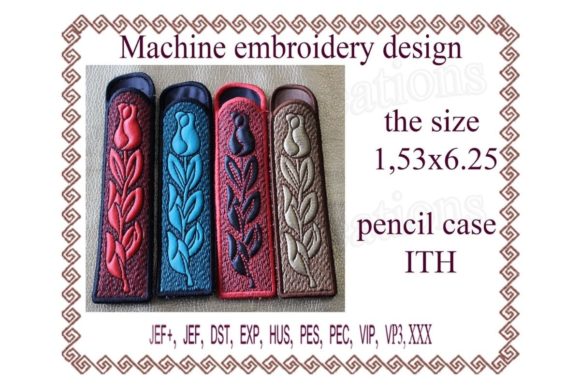
The description notes that the design comes in multiple sizes, with some variations being taller or wider depending on the specific layout. This flexibility is crucial for commercial embroidery where you might need to fit a design into a 4x4 hoop for a cap or a 5x7 hoop for a larger towel.
Practical Considerations for Stitching
Before running a full batch of customer orders, any experienced embroiderer knows you must consider the technical aspects. Since this is a Creative Fabrica embroidery product, we do not have the physical file in hand to check the exact stitch count or density immediately. However, based on the visual complexity, here are the practical factors I would evaluate during a test run.
Stitch Density and Fabric Choice: Designs with filled areas require careful attention to stitch density. If the fill stitches are too dense, they can cause puckering, especially on lighter fabrics like cotton tea towels or baby blankets. I recommend testing on scrap fabric first. If you are stitching on stretchy fabric, such as a sweatshirt fleece, using a cut-away stabilizer is non-negotiable to maintain shape. For woven fabrics like canvas or denim, a tear-away stabilizer may suffice, but always check the back of the hoop for stability.
Thread Color Contrast: The success of this design relies heavily on your thread colors. Because the design likely features distinct sections, choosing high-contrast threads will make the details pop. For example, using a dark navy on a light gray hoodie will ensure the design is visible from a distance. Conversely, tonal stitching can create a subtle, sophisticated look for boutique merchandise.
Hoop Size and Placement: The product description mentions multiple sizes. It is vital to confirm which hoop size corresponds to which file version before loading it into your machine. Attempting to resize an embroidery file significantly beyond its original dimensions can distort the stitch angles and cause breaks. Always stick to the provided sizes to ensure the integrity of the satin stitch and fill stitch elements.
Enhancing Product Value and Brand Trust
Why does the choice of design matter for your bottom line? In the world of digital embroidery file usage, consistency builds trust. Using a high-quality, unique design like Pencil Case helps differentiate your finished product from mass-produced items. Customers can spot low-resolution or poorly digitized designs instantly. A clean, well-stitched image signals quality care.
Furthermore, this design lends itself well to personalized gift offerings. You could easily add a monogram below the main motif using a complementary font. This customization increases the perceived value, allowing you to charge a premium for custom apparel or bespoke stationery sets. For Etsy sellers, having a design that works for both kids and adults expands your target market significantly.
Final Recommendations for Use
If you are considering adding this to your library, here is my checklist for ensuring success:
- Check the License: Always review the licensing terms on the Creative Fabrica product page. Ensure that the license covers the number of physical items you plan to sell if you are running a business.
- Test on Dark Fabric: If you plan to offer black or navy items, check if the design includes underlay stitches sufficient to prevent the background fabric from showing through the top stitches. You may need to adjust your tension or use a topping stabilizer.
- Inspect Small Details: After your test stitch-out, inspect the smallest elements. Are the connecting ties trimmed neatly? Is there any bird nesting? These small details determine whether a customer keeps an item or returns it.
- Create Printable Mockups: Before stitching a final product, use digital mockups to visualize how the design looks on different colored garments. This saves time and thread during the design phase.
In conclusion, the Pencil Case design offers a charming and practical solution for creators looking to expand their Sewing and Embroidery portfolios. It balances aesthetic appeal with technical feasibility, making it a strong contender for back-to-school promos, teacher gifts, or everyday carry accessories. By taking the time to test your stabilizers and thread choices, you can turn this applique design or standard stitch file into a bestseller for your shop. Always remember to verify the specific file formats and hoop compatibility listed in the product details to ensure a smooth stitching experience.